
ABRA Auto Body Repair of Fort Collins has published new consumer guidance explaining how drivers can document dashboard warning lights and vehicle messages that appear after a collision. The August update adds a four-part framework covering restraint-system indicators, braking and stability-control warnings, tire and wheel-related notifications, and advanced driver-assistance system messages.
The material expands the facility's existing collision repair information to address a specific consumer information gap: dashboard warnings can provide useful information after an accident, but the warning itself does not identify its cause or establish what collision repair procedure may be required.
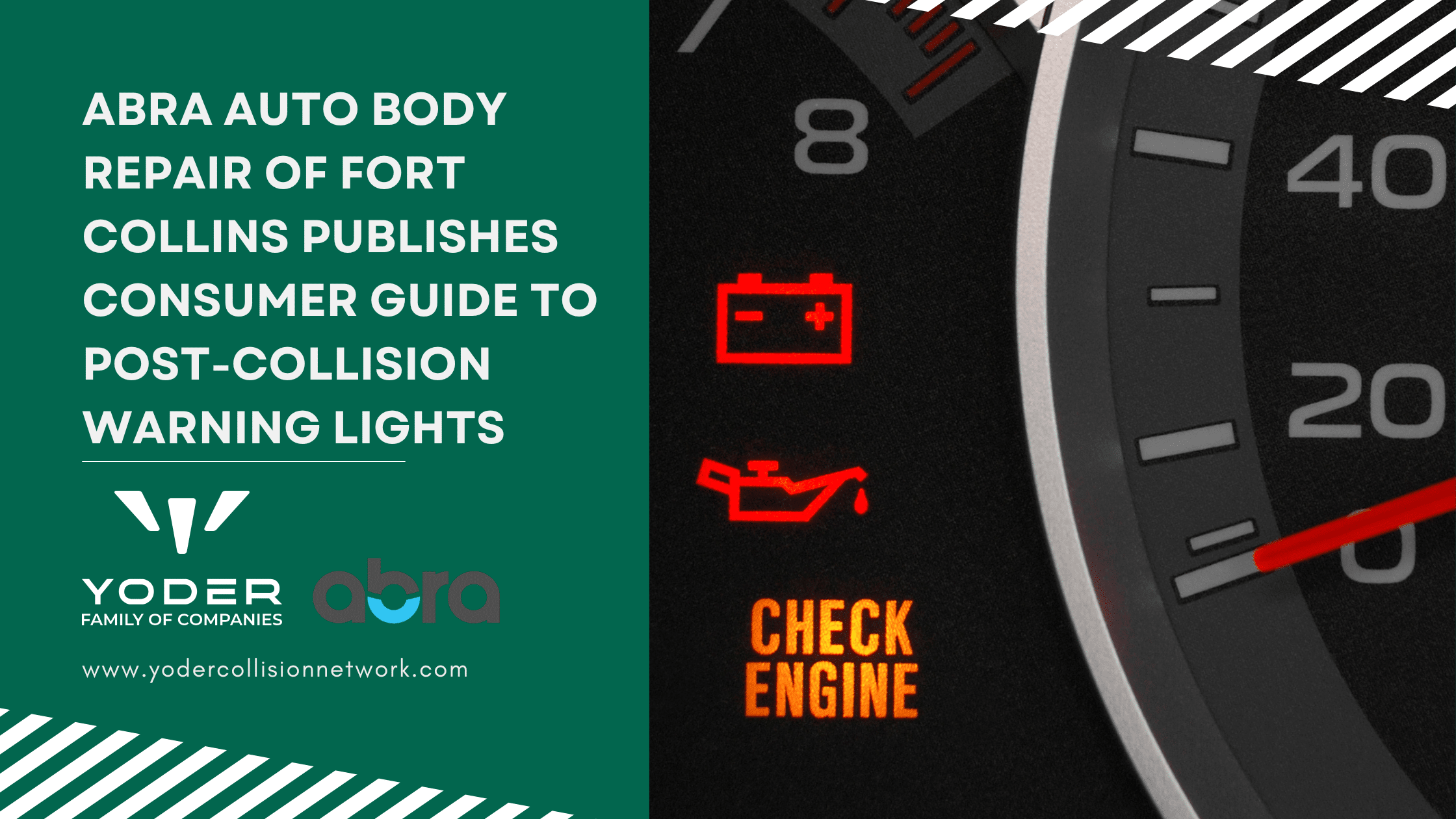
ABRA Auto Body Repair of Fort Collins operates as part of Yoder Collision Network, the collision repair division of the Yoder Family of Companies. The August guidance gives consumers a structured way to document electronic changes noticed after an accident and communicate those observations during a vehicle evaluation.
The first area addressed in the guide is restraint-system information.
Modern vehicles can monitor components associated with airbags, seat belts, impact sensing, and related restraint functions. When a restraint-system indicator appears following a collision, the guide recommends documenting when it first appeared and providing that information during the vehicle evaluation.
The presence or absence of airbag deployment does not by itself explain why a restraint-system warning is displayed. Diagnostic information, inspection findings, vehicle configuration, and applicable manufacturer procedures can contribute to determining the reason for the indicator.
The second area covers braking and stability-control warnings.
These systems can rely on information from components located throughout the vehicle. When an accident involves a wheel, tire, suspension area, or nearby components, the circumstances of that impact can provide relevant context during evaluation.
A curb impact, for example, may leave limited visible body damage. If a braking or stability-control indicator appears after the incident, technicians can consider both the warning and the affected area during the evaluation. The guide does not state that such an impact necessarily caused a particular component failure.
The third area addresses tire and wheel-related notifications.
A tire-pressure warning following an impact does not independently identify its cause. Tire pressure, tire condition, the wheel, and related components can be evaluated according to the circumstances and findings associated with the individual vehicle.
The fourth area concerns advanced driver-assistance systems, commonly referred to as ADAS.
Modern vehicles can incorporate cameras, radar units, parking sensors, and other electronic components in or near bumpers, mirrors, grilles, windshields, and exterior body areas. Depending on the vehicle and location of collision damage, repairs involving these areas can require technicians to consult manufacturer-specific information when developing the repair plan.
Consumers may encounter messages indicating that a driver-assistance feature is unavailable or requires attention. Other conditions may be represented by diagnostic information stored by the vehicle rather than through a continuously displayed warning.
The August guide advises drivers to document both persistent and intermittent messages. Information about when an indicator first appeared, whether it remained present, and whether other changes occurred at approximately the same time can provide additional context during evaluation.
Diagnostic scanning is also addressed in the new material.
Electronic diagnostic tools can retrieve available system information, including stored diagnostic trouble codes. That information can contribute to a collision evaluation, but a stored code does not necessarily identify the physical cause of a condition by itself. Technicians can consider diagnostic data alongside collision damage, inspection findings, vehicle configuration, and applicable manufacturer procedures.
I-CAR publishes independent collision-repair education and technical information addressing vehicle diagnostics, electronics, ADAS, and related subjects. Additional technical information is available through I-CAR. I-CAR is referenced as an independent industry resource and is not presented as an author, sponsor, or endorser of ABRA Auto Body Repair of Fort Collins' consumer guidance.
Another addition to the August resource concerns information consumers can preserve before their vehicle is evaluated. Rather than treating disappearance of a dashboard message as confirmation that the underlying condition has been identified, drivers can record the indicator and circumstances surrounding its appearance.
The guide identifies four pieces of information consumers can document: the warning or message displayed, when it first appeared, whether it remained present or appeared intermittently, and any other changes in vehicle operation noticed after the collision.
These observations can then be included with other information considered during the collision evaluation.
Manufacturer-specific repair information becomes relevant when technicians determine applicable procedures. Requirements can differ according to vehicle make, model, equipment, affected components, and the repairs being performed. For that reason, the August resource does not suggest that every post-collision warning requires the same diagnostic procedure, repair, or calibration.
The distinction between consumer observation and technical evaluation is the central purpose of the new guide. Drivers can document what changed following an accident, while technicians use vehicle-specific information and evaluation findings to determine the appropriate next steps.
By adding the four-part warning-light framework and documentation checklist in August, ABRA Auto Body Repair of Fort Collins has expanded its consumer collision-repair information with a more specific resource for drivers encountering electronic warnings after an accident.
The August consumer information is available through Yoder Collision Network's collision repair resource. Related information about auto body repair is also available through Yoder Collision Network.
Additional organizational updates are available through the Yoder Family of Companies Facebook page.
About ABRA Auto Body Repair of Fort Collins
ABRA Auto Body Repair of Fort Collins operates as part of Yoder Collision Network, the collision repair division of the Yoder Family of Companies. The facility provides collision repair, auto body repair, vehicle diagnostics, repair planning, and related vehicle restoration services.
###
For more information about ABRA Auto Body Repair of Fort Collins, contact the company here:
ABRA Auto Body Repair of Fort Collins
Micah
970-482-9927
fortcollins@abraauto.com
2520 Co Rd 54G, Fort Collins, CO 80524
