American College of Surgeons Emergency Surgery Verification Linked to Lower Death Rates, Shorter Hospital Stays
PR Newswire
CHICAGO, Nov. 4, 2026
Study of 55 hospitals finds improved outcomes after Emergency General Surgery Verification, compared with hospitals that were not verified
Key Takeaways
- Emergency general surgery treats urgent and often life-threatening conditions such as appendicitis, gallbladder disease, and bowel obstruction. These patients face some of the highest complication and mortality rates among surgical patients.
- Patients treated at hospitals that earned American College of Surgeons Emergency General Surgery Verification demonstrated lower 30-day death rates and experienced shorter hospital stays after their hospitals earned verification, according to an analysis published in JAMA Surgery.
- In a separate before-and-after analysis of verified hospitals, researchers also observed improvements in how patients received care, including faster time from admission to surgery and more care under a surgical team.
CHICAGO, Nov. 4, 2026 /PRNewswire/ -- Patients treated at hospitals that earned American College of Surgeons (ACS) Emergency General Surgery Verification demonstrated lower 30-day death rates and experienced shorter hospital stays after their hospitals earned verification, according to an analysis published in JAMA Surgery. The analysis included more than 20,000 patients who underwent emergency general surgery at 55 hospitals, five of which became verified during the study period.
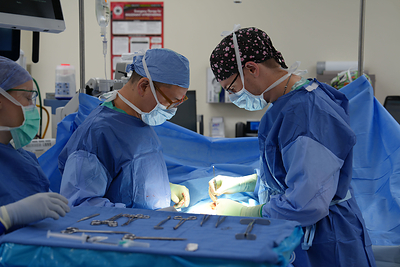
Emergency general surgery treats urgent and often life-threatening conditions such as appendicitis, gallbladder disease, and bowel obstruction. Patients often need surgery with little warning, and their care requires several clinical teams to work together. These patients face some of the highest complication and mortality rates, and previous research has found rising death rates from some emergency surgical conditions among adults younger than 65, particularly in rural areas.
"Emergency surgery patients arrive with a wide range of conditions and levels of illness, often with little time to plan their care," said Michael Wandling, MD, MS, FACS, a study co-author and chief of trauma at The University of Texas in Houston, Texas. "This is an important patient population where there is a huge opportunity to improve care, and how hospitals deliver that care can make a big difference."
The Emergency General Surgery Verification Program (EGS-VP), developed by the ACS in 2022 with the American Association for the Surgery of Trauma, provides hospitals with standards and infrastructure to manage this high-risk patient population to improve clinical and financial outcomes. Hospitals seeking verification must meet 43 standards, including requirements for care pathways and coordination among clinical teams, and an ACS review assesses whether they meet those standards.
For the JAMA Surgery study, researchers analyzed data from the ACS National Surgical Quality Improvement Program (NSQIP) for 21,858 patients who underwent emergency general surgery at 55 hospitals between July 2023 and December 2024. Researchers examined whether patient outcomes changed after five hospitals earned verification and compared those changes with outcomes over the same period at 50 hospitals that did not earn verification. This approach, called a difference-in-differences analysis, helps account for trends affecting both groups of hospitals.
Key Study Findings
Relative to changes at hospitals that did not undergo verification, verification was associated with:
- Lower death rates: The 30-day postoperative death rate was 28.8% lower.
- Fewer serious kidney injuries: The rate of acute kidney injury, a serious postoperative complication and measure of both timeliness and quality surgical care, was 29% lower.
- Shorter hospital stays: Stays after surgery averaged 1.31 fewer days, a 19.7% reduction.
In a separate before-and-after analysis of verified hospitals, researchers observed improvements in how patients received care.
- Faster surgery: Median time from admission to surgery fell from 31.9 hours to 21.2 hours, a decrease of 10.7 hours.
- More care under a surgical team: The share of patients admitted to an emergency general surgery service rose from 74.8% to 85.7%.
- Fewer operations after unsuccessful nonsurgical treatment: The share of patients who underwent surgery after an unsuccessful attempt to treat their condition without an operation fell from 25.5% to 19%. This measure may reflect more consistent decisions about when to operate, the authors noted.
"Emergency surgery can happen to anyone, and data from the past two decades has shown us that these patients face some of the worst outcomes among surgical patients," said Clifford Y. Ko, MD, MS, MSHS, FACS, senior author of the study and senior vice president of the ACS Division of Research and Optimal Patient Care. "These findings show, for the first time in emergency general surgery, what we've seen for our other quality programs: that the quality and timeliness of surgical care can be dramatically improved through the structured framework provided through ACS verification, whether it's at an academic or community hospital."
The study reflects early results from five verified hospitals and a limited follow-up period. Hospitals chose whether to seek verification and participate in the NSQIP data program, and other differences between hospitals or patients may have influenced the findings.
"This study shows that implementing emergency general surgery verification was a successful strategy for improving both the speed and quality of care for patients undergoing emergency general surgery, which are important metrics also tied to reduced hospital costs," said Geoffrey Hobika, MD, first author of the study, and an ACS clinical scholar in residence and surgery resident at the University of Buffalo in Buffalo, New York. "The next step is to see whether those improvements continue among verified hospitals and as more hospitals receive verification."
Learn more about EGS-VP at www.facs.org/egs.
Citation: Hobika GG, Wandling M, Remer SL, et al. Improving Quality Through the Emergency General Surgery Verification Program. JAMA Surg. Published online November 4, 2026. doi:10.1001/jamasurg.2026.5254
About the American College of Surgeons
The American College of Surgeons (ACS) is a scientific and educational organization of surgeons that was founded in 1913 to raise the standards of surgical practice and improve the quality of care for all surgical patients. The ACS is dedicated to the ethical and competent practice of surgery. Its achievements have significantly influenced the course of scientific surgery in America and have established it as an important advocate for all surgical patients. The ACS has more than 95,000 members and is the largest organization of surgeons in the world. "FACS" designates that a surgeon is a Fellow of the ACS.
Follow the ACS on social media: X | Instagram | YouTube | LinkedIn | Facebook

 View original content to download multimedia:https://www.prnewswire.com/news-releases/american-college-of-surgeons-emergency-surgery-verification-linked-to-lower-death-rates-shorter-hospital-stays-302929559.html
SOURCE American College of Surgeons

